
Miami insurance agencies lose after-hours leads for one blunt reason: the shopper is online at 10pm, and nobody is there to answer. An AI chat widget fixes that gap — it engages every visitor instantly, qualifies them, captures a TCPA-compliant opt-in, and books the quote appointment into a producer’s calendar while the office is dark. By morning, instead of a cold form-fill (or nothing at all), you have a named prospect with their line of business, their timeline, and a booked call — a lead your team can win instead of one your competitor already did.
This is the operator view of the problem: when Miami insurance shoppers actually show up, why a slow response quietly hands them to the agency down the street, and exactly how a 24/7 AI chat widget turns your website into a lead-capture machine that never clocks out.
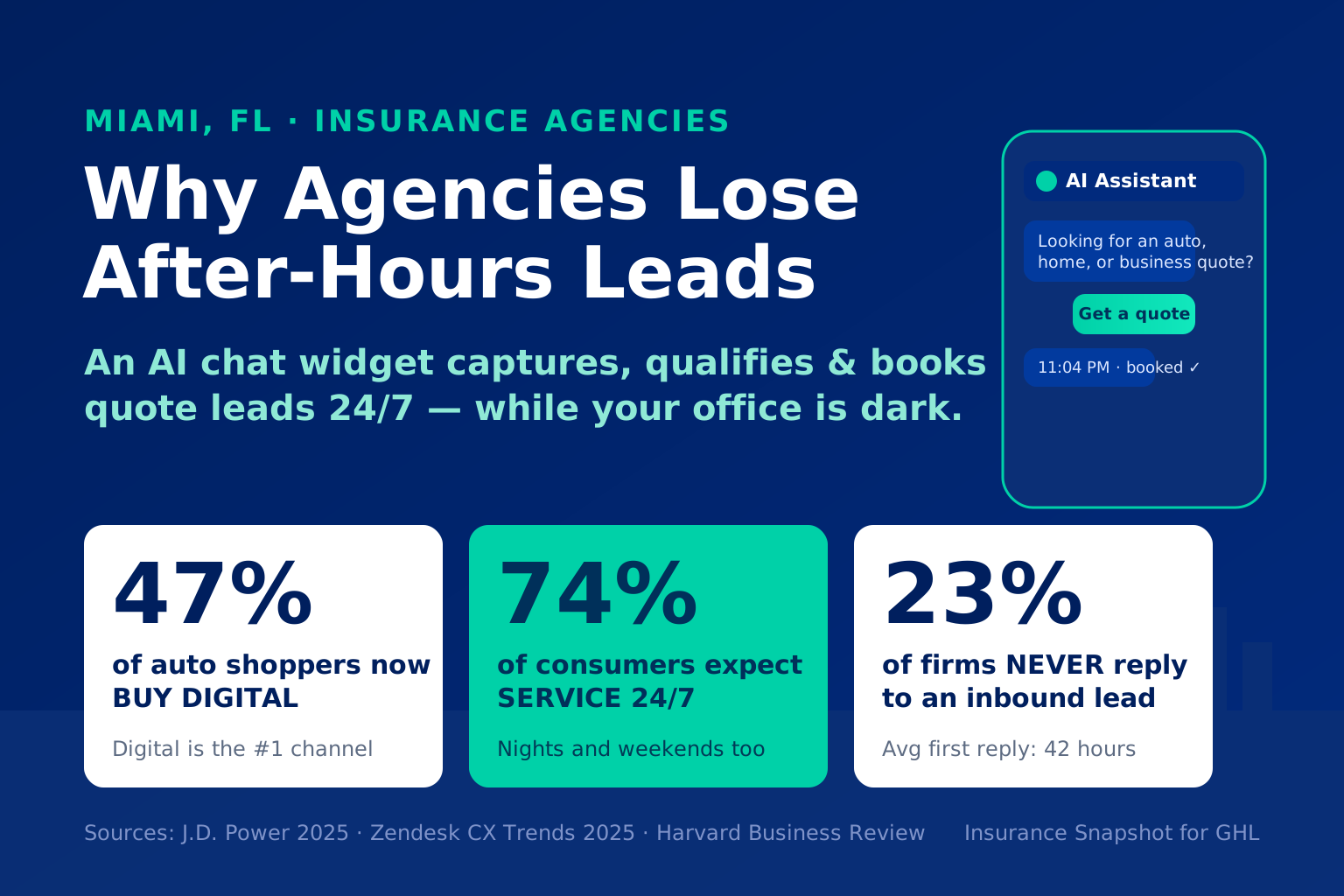
Table of contents
- The after-hours leak: when Miami shoppers actually show up
- Why a missed after-hours lead is gone for good
- What an AI chat widget actually does
- Miami buyers are already shopping online
- AI chat widget vs contact form vs live human chat
- Setting it up TCPA-safe for a Miami agency
- FAQ
The after-hours leak: when Miami shoppers actually show up
Insurance shopping doesn’t keep office hours. A Kendall homeowner comparing quotes after the kids are down, a rideshare driver pricing auto coverage on a lunch break, a small-business owner in Doral looking for a BOP at 11pm — these are the moments people actually research insurance. They land on an agency site, and the clock is already running.
Here’s the tension. Nationally, 74% of consumers now expect customer service to be available around the clock (Zendesk CX Trends 2025), and 90% of consumers rate an “immediate” response as important — with 60% defining “immediate” as 10 minutes or less (HubSpot). A shopper who reaches your site outside business hours isn’t planning to wait until 9am. They’re going to keep shopping — and there are always more tabs open.
That expectation collides with how a typical agency website behaves after 5pm. The phone rolls to voicemail. The contact form drops an email into an inbox nobody will read until morning. The live chat says “We’re away.” For a market as competitive and price-driven as South Florida, that overnight silence is exactly where leads leak out.
Why a missed after-hours lead is gone for good
An after-hours lead isn’t “delayed” — it’s usually decided. By the time a producer sees the form fill at 9am, the shopper has already moved on to the next agency that answered.
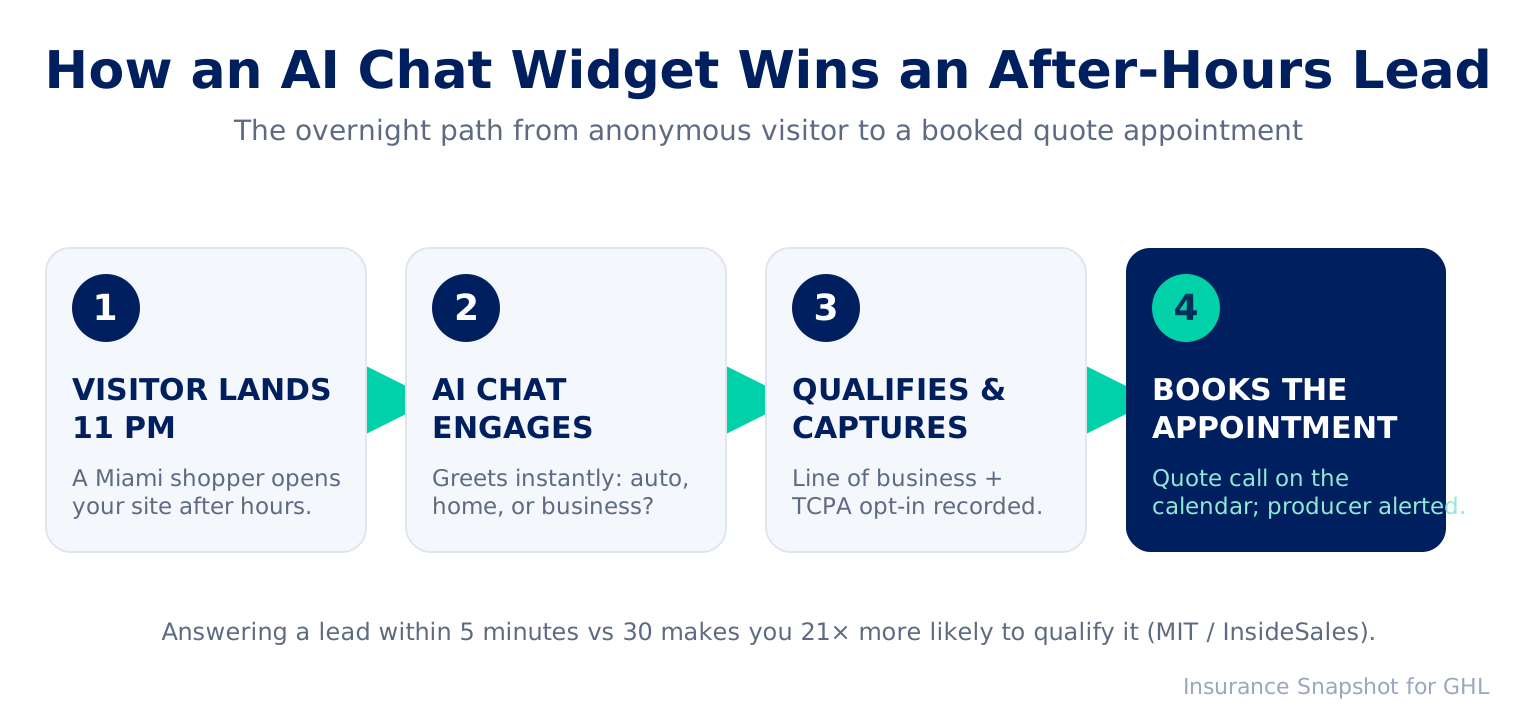
The data on response speed is unforgiving. In the landmark MIT / InsideSales analysis of more than 15,000 leads and 100,000 dial attempts, contacting a web lead within 5 minutes instead of 30 made an agency 21× more likely to qualify it, and waiting even 30 minutes cut the odds of ever reaching the person by roughly 100× (MIT / InsideSales Lead Response Study). A lead that sits untouched overnight is well past that window before your day even starts.
And most businesses respond far more slowly than they think. When Harvard Business Review audited how 2,241 U.S. companies handled inbound web leads, only 37% responded within an hour, 24% took more than 24 hours, and 23% never responded at all — with an average first-response time of 42 hours (Harvard Business Review).
How fast businesses actually respond to inbound web leads (% of 2,241 U.S. companies audited). Nearly half took over a day or never replied. Source: Harvard Business Review, “The Short Life of Online Sales Leads”.
Now layer the mobile reality on top. Google’s long-standing benchmark found that 53% of mobile visitors abandon a site that takes longer than three seconds to load (Google). If a South Florida shopper does push through a slow page and fill out your form at midnight, the silence that follows is the second place you lose them. Speed to load, then speed to respond — miss either and the lead evaporates.
What an AI chat widget actually does
An AI chat widget is a conversational assistant that lives on your website and engages every visitor the moment they arrive — day or night. For an insurance agency, it does four specific jobs that a form and a voicemail box cannot:
- Engages instantly, 24/7. The second a visitor lands — 2pm or 2am — the widget opens with a relevant, on-brand greeting (“Looking for an auto, home, or business quote?”) instead of a static form. No “we’re away” message, no wait.
- Qualifies the lead. It asks the questions a producer would: line of business, ZIP, current carrier, renewal or X-date, whether they own or rent. By the time a human sees the conversation, the lead is pre-qualified, not a name and a blank.
- Captures a consented contact. It collects name, phone, and email with a clear TCPA opt-in and disclosure baked into the flow — so you can legally follow up by text and call, with the consent recorded.
- Books the appointment or hands off. It offers real calendar slots and books the quote consultation directly, or routes urgent conversations to an on-call producer. The shopper leaves with a confirmed next step, not a hope that someone calls back.
The result is that the moment of highest intent — when the shopper is actually on your page, thinking about coverage — is the moment you engage them, instead of hours later when they’ve moved on. This is the same speed-to-lead advantage covered in our speed-to-lead playbook, applied to the channel where Miami shoppers now start: your website.
A chat widget and an AI phone receptionist solve the same after-hours problem on two different channels — the website and the phone. Many Miami agencies run both, because some shoppers type and some call. The chat widget is the one that captures the growing majority who never pick up the phone at all.
Miami buyers are already shopping online
This isn’t a hypothetical future — it’s already how insurance gets bought. J.D. Power’s 2025 study found that 57% of auto insurance customers actively shopped for a new policy in the past year, the highest rate ever recorded, and that digital channels are now the #1 way customers buy, ahead of agents and call centers (J.D. Power 2025 U.S. Insurance Shopping Study).
How auto insurance customers now purchase a policy, by channel (%). Digital is now the #1 channel. Source: J.D. Power 2025 U.S. Insurance Digital Experience Study.
For a Miami agency, that shift is the whole argument. Your website has quietly become your busiest branch — and its busiest hours are the ones no one is staffing. An AI chat widget is simply how you put a knowledgeable, always-on “producer” behind the front door that most of your shoppers now walk through. Pair it with a fast, conversion-built site (see our take on Astro vs GoHighLevel vs WordPress for insurance sites) and a proper quote-intake funnel, and every digital shopper who arrives gets engaged, qualified, and booked.
AI chat widget vs contact form vs live human chat
Agencies usually have something on the site already. The question is whether it actually captures after-hours intent. Here’s the honest comparison.
A quiet website vs. an AI chat widget on duty
10pm visitor sees a static contact form → fills it out (or leaves) → email sits until 9am → producer calls back next afternoon → shopper already bound elsewhere.
10pm visitor is greeted instantly → AI qualifies line of business → captures a TCPA opt-in → books a 9:30am quote call → producer wakes up to a warm, pre-qualified appointment.
After-hours lead capture: what each option really does
| Plan | AI chat widget (24/7) recommended | Static contact form | Live human chat |
|---|---|---|---|
| Price | Included in the Snapshot | Free | Staff time |
| Feature 1 | Engages every visitor instantly, day or night | Captures a name and email — if they bother | Great — but only while someone is online |
| Feature 2 | Qualifies by line of business, ZIP, renewal date | No qualification, no conversation | Shows 'away' nights, weekends, holidays |
| Feature 3 | Captures a consented (TCPA) contact automatically | Response depends on a human checking the inbox | Doesn't scale to simultaneous visitors |
| Feature 4 | Books the quote appointment into a real calendar | After-hours leads wait until morning | Exactly the hours you're closed are uncovered |
| Feature 5 | Never sleeps, never forgets to follow up | No booking, no consent flow | Costs producer time during the day |
| See the AI chatbot |
Live human chat is genuinely good during business hours. The problem is that “business hours” is precisely when you’re least likely to be losing leads — the leak is at night and on weekends, and that’s the shift no human wants to staff. An AI chat widget covers the gap without adding headcount, and hands warm, booked conversations to your team the next morning.
Setting it up TCPA-safe for a Miami agency
An always-on chat widget only helps if it’s built to collect consent properly — otherwise you’ve automated a compliance problem. This is where the “done-for-you” part matters, and it’s the same discipline we apply across our TCPA-safe SMS work. A clean setup covers:
- Clear consent language in the flow. Before it captures a phone number for texting, the widget presents a plain-English disclosure and opt-in — and records that consent with a timestamp, so you have proof.
- Honest AI disclosure. The assistant makes clear a shopper is chatting with an automated assistant, and offers a path to a human.
- STOP/HELP handling. Any follow-up texting respects opt-outs automatically.
- The agency stays the licensed party. The widget captures, qualifies, and books — it doesn’t quote, bind, or give coverage advice. Every policy decision stays with your licensed producers.
Once the widget is live, the payoff compounds. Every after-hours visitor becomes a named, qualified, booked lead instead of a maybe. Those leads flow straight into the pipeline your quote funnel and renewal cadence already run, so the same household you captured at midnight gets nurtured, cross-sold, and retained on autopilot. If you’d rather not operate any of it day-to-day, a dedicated GoHighLevel VA can run the whole system for you — and if you need a faster, conversion-built site to put the widget on, that’s what our website service exists for.
FAQ
What is an AI chat widget for an insurance agency?
It's a conversational assistant that lives on your agency website and engages every visitor automatically, 24/7. For insurance it does four jobs: greets the shopper instantly, qualifies them by line of business and details like ZIP and renewal date, captures their contact with a TCPA-compliant opt-in, and books a quote appointment or routes urgent chats to a producer. It turns your website — now the #1 place people buy insurance — into an always-on intake desk.
How does an AI chat widget help a Miami insurance agency specifically?
Miami is a mobile-first, price-sensitive shopping market with some of the highest premiums in the country — Miami home insurance averages around $14,520/year — so households actively shop, often late at night on their phones. Those after-hours visitors are high-intent, but most agency sites only offer a form nobody answers until morning. An AI chat widget engages and books them on the spot, so you capture the lead instead of handing it to the competitor who answered first.
Is an AI chat widget TCPA compliant?
It is when it's built correctly. A proper setup presents clear consent language and a plain-English opt-in before capturing a phone number for texting, records that consent with a timestamp, discloses that the shopper is chatting with an automated assistant, offers a path to a human, and honors STOP/HELP opt-outs. The agency remains the licensed party — the widget captures, qualifies, and books, but does not quote, bind, or give coverage advice.
How is an AI chat widget different from an AI phone receptionist?
They solve the same after-hours problem on two different channels. The AI chat widget captures shoppers who type on your website; the AI phone receptionist answers shoppers who call. Many agencies run both because some prospects chat and some call. The chat widget is the one that captures the growing majority of digital-first shoppers who never pick up the phone.
Will an AI chat widget replace my producers?
No — it feeds them. The widget handles the parts producers hate doing at 11pm: greeting, basic qualification, consent capture, and booking. Your licensed producers still do the real work — quoting, advising, and binding — but they walk into pre-qualified, booked appointments instead of chasing cold form fills. It adds after-hours coverage without adding headcount.
How long does it take to add an AI chat widget to my agency?
As part of the Insurance Snapshot for GHL, the AI chat widget installs into your GoHighLevel account in about 24 hours, already wired to your quote funnels, appointment calendar, renewal cadence, and TCPA-safe SMS. Because it's one feature inside the whole system rather than a disconnected tool, a lead captured by chat enters the same pipeline and follow-up as every other lead.
About the author
Priya Raman is an Insurance Agency Growth Strategist at Insurance Snapshot for GHL. She works with independent and captive agencies on the growth side of automation — turning website traffic and existing books into booked appointments and recurring cross-sell revenue. She thinks in terms of premium written, retention by line, and producer capacity rather than vanity metrics, and writes about which automations actually pay for themselves and how to measure whether any of it is working. Editorial byline only — Priya is not a licensed agent and does not quote, bind, or sell insurance.
Want to stop losing after-hours leads? See the AI chatbot feature, book a 30-minute demo, or talk to a real person.